Multiplication of Two Numbers
At the end of this lesson, you should be able to:
- Multiply by powers of 10 or decompose a natural number in powers
of 10.
- Multiply two entire numbers utilizing the following methods:
- Rectangular multiplication using a concept of the sum of the
areas.
- Multiplication in a grid
- Standard Multiplication
A natural number can be decomposed like the sume of every one of
their figures multiplied by a power of 10. Every power of 10 that will
be multiplied at the figure will depend on the positioned value of the
figure, counting right to left:
| positional value |
power of 10 |
| units |
|
| tenths |
|
| hundredths |
|
| ... |
... |
| position n |
n - 1 zeros |
| position n + 1 |
n zeros |
Example: Decompose 315 in powers of 10.
Solution:
Utilize the following applet to decompose the natural numbers in
power of 10.
Applet provided by National Library of Virtual Manipulatives (nlvm.usu.edu).
Multiplication of two numbers decomposed in powers of 10
You decompose a number in powers so that you can facilitate the
multiplication between numbers. We only need to know the basic tables
of multiplication, which will be shown in a continuation:
| × |
0 |
1 |
2 |
3 |
4 |
5 |
6 |
7 |
8 |
9 |
| 0 |
0 |
0 |
0 |
0 |
0 |
0 |
0 |
0 |
0 |
0 |
| 1 |
0 |
1 |
2 |
3 |
4 |
5 |
6 |
7 |
8 |
9 |
| 2 |
0 |
2 |
4 |
6 |
8 |
10 |
12 |
14 |
16 |
18 |
| 3 |
0 |
3 |
6 |
9 |
12 |
15 |
18 |
21 |
24 |
27 |
| 4 |
0 |
4 |
8 |
12 |
16 |
20 |
24 |
28 |
32 |
36 |
| 5 |
0 |
5 |
10 |
15 |
20 |
25 |
30 |
35 |
40 |
45 |
| 6 |
0 |
6 |
12 |
18 |
24 |
30 |
36 |
42 |
48 |
54 |
| 7 |
0 |
7 |
14 |
21 |
28 |
35 |
42 |
49 |
56 |
63 |
| 8 |
0 |
8 |
16 |
24 |
32 |
40 |
48 |
56 |
64 |
72 |
| 9 |
0 |
9 |
18 |
27 |
36 |
45 |
54 |
63 |
72 |
81 |
To multiply two numbers that are multiples of 10:
- Count the amount of zeros that are in the two factors, from the
right to the left, until a figure different than zero presents
itself. Then write this quantity of zeros in the solution.
- Multiply the previous figures a the zeros that we counted and
write the product before the zeros that are already written in the
solution.
Example:
Solution: We have two natural numbers that are multiples of 10
and don't have to decompose.
We count the quantity of zeros between the two numbers, from right to
left, until we find a figure different than zero and place the total
quantity of zeros in the solution, leaving a white space for when we
multiply the different figures of zero.
20 × 300 = __000
Now we multiply the previous figures of the zeros, in this case the
product of 2 and 3, in the space that we left white, before the zeros
of the solution, and like this we complete the exercise.
20 × 300 = 6000
The decomposition of a number in powers can facilitate the
multiplication between numbers. First we decompose the numbers and
apply the distributive property.
Example:
Solution: We decompose different numbers in power of 10.
36 × 45 = [(3 × 10) + 6] × [(4 × 10) + 5] = (30 + 6)
× (40 + 5)
Now we apply the distributive property to multiply every one of the
formed factors.
(30 + 6) × (40 + 5) = (30 × 40) + (30 × 5) + (6 × 40)
+ (6 × 5)
We proceed to find the product of every one of the multiplications,
following the instructions in the previous example:
(30 × 40) + (30 × 5) + (6 × 40) + (6 × 5) = 1200 + 150
+ 240 + 30
Finally we sum up the results.
1200 + 150 + 240 + 30 = 1620
In general, 36 × 45 = 1620.
Find the solution of a rectangular multiplication that consists of
finding the areas of all the rectangles that are formed, then to sum
them up.
In the application below, you can move the buttons to practice the
multiplication of numbers that are 1 digit, with many positives as well
as negatives.
Applet provided by del National Library of Virtual Manipulatives (nlvm.usu.edu).
Observe that the regions where some numbers have the same sign
produce a positive number (blue areas); while the multiplication of
numbers with distinct signs produce a negative number (area red). This
way we can conclude the following information in the table:
| if the first number is... |
and the second number is... |
then the product will be... |
positive
(+) |
positive
(+) |
positive
(+) |
positive
(+) |
negative
(-) |
negative
(-) |
negative
(-) |
positive
(+) |
negative
(-) |
negative
(-) |
negative
(-) |
positive
(+) |
Rectangularly Multiply the sums of two numbers
We can visualize the rectangular multiplication of two numbers in
the total sum of the areas of the internal rectangles, which is the
total of the large rectangle. The product of the quantity of sums for
every factor, gives us the quantity of internal rectangles to sum.
Example Find the product of
.
Solution: This can be visualized in the best way in the
following rectangle. Like every sum has two parts, we have to sum four
internal area, or a rectangle 2 × 2.
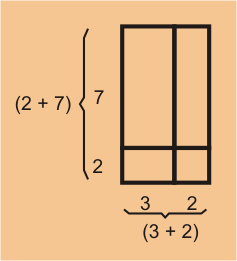
There are two solutions to this problem:
- The first method in finding the area of the large rectangle.
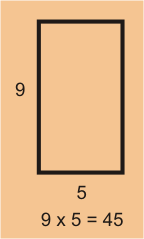
Using this technique, the corresponding area is
.
- The second method consists in finding the area of all the
internal rectangles and summing them up.
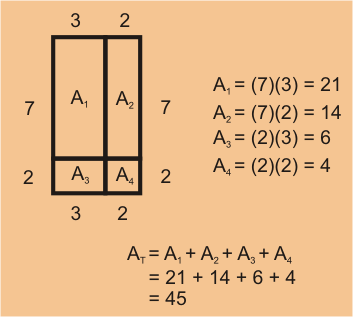
In this case, the area is the same as
. Like the area of a similar rectangle cannot be changed,
the two solutions give the same answer. Then in terms of the
multiplication of binomial expressions, we can conclude that
.
Rectangularly multiply two decomposed numbers in powers of
101.
Here we can assume that the premise that can be applied to the
decomposition of numbers in powers of 10 to create sums and with this
multiply them by another sum that is decomposed in the same form.
Example #1 Find the product of
.
Solution:
To be able to visualize it like the area of a rectangle, we should
first draw the rectangle with a factor as a base and the other as the
height. Then we decompose some factors to know how many internal
rectangles we have to sum.
Hence,
Then the rectangle will stay segmented like a rectangle 2 × 2:
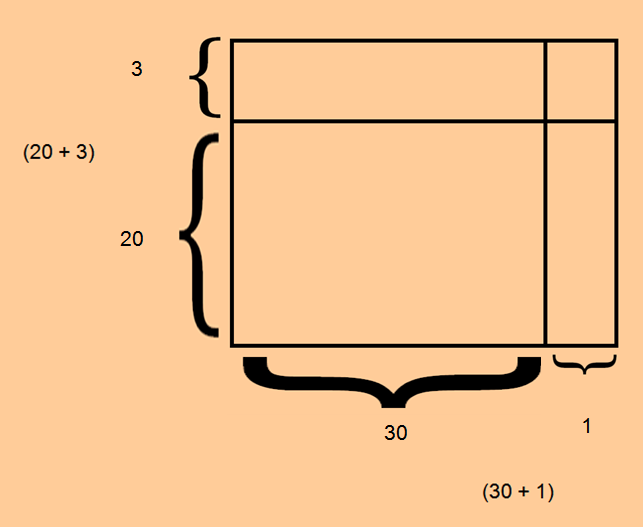
Now we find the area of every one of the internal rectangles, to
later sum them all up.
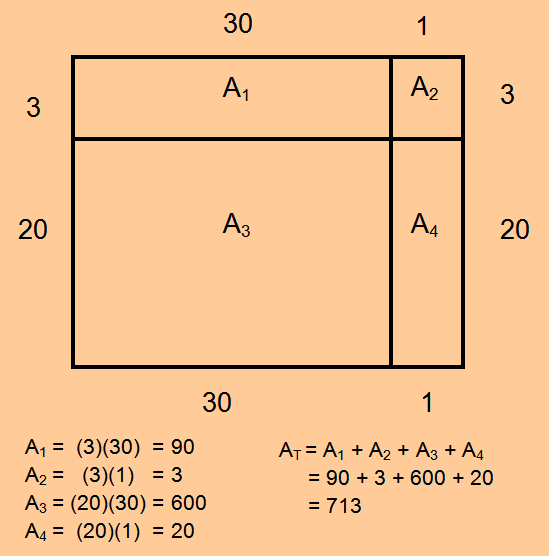
In this case, the area is the same
as . We know this should be at every one of the sume is one
of the partial products that we obtained to multiply by
decomposition.
Then we can canclude that
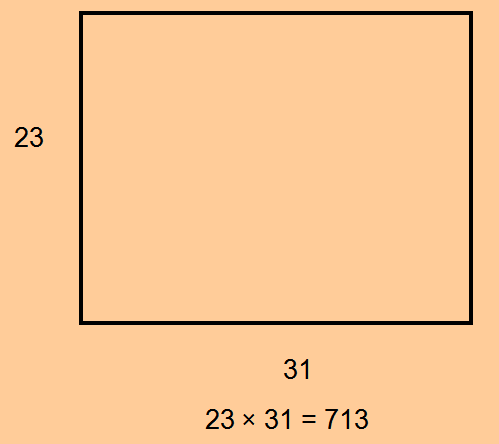
Example #2 Find the product of
.
Solution:
To be able to visualize how the area of a rectangle, we should first
draw the rectangle with one factor as the width and the other as the
height. Then we decompose some factors to know how many internal
rectangles we have to sum up.
Hence,
Then the rectangle that stays segmented like a rectangle 3 × 2:
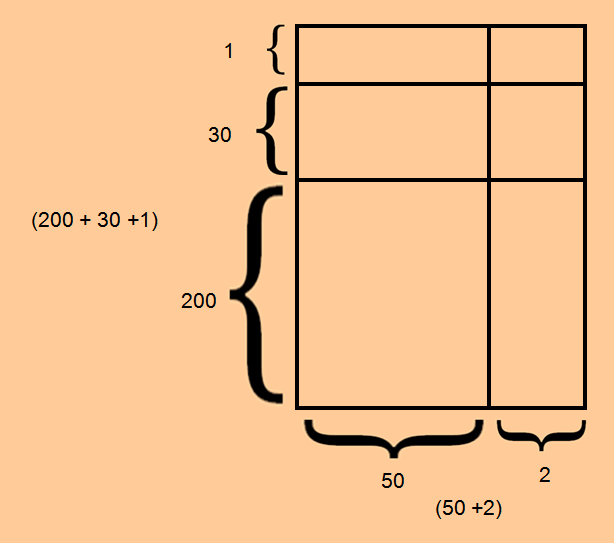
Now we find the area of every one of the internal rectangles, to
later sum them all up.
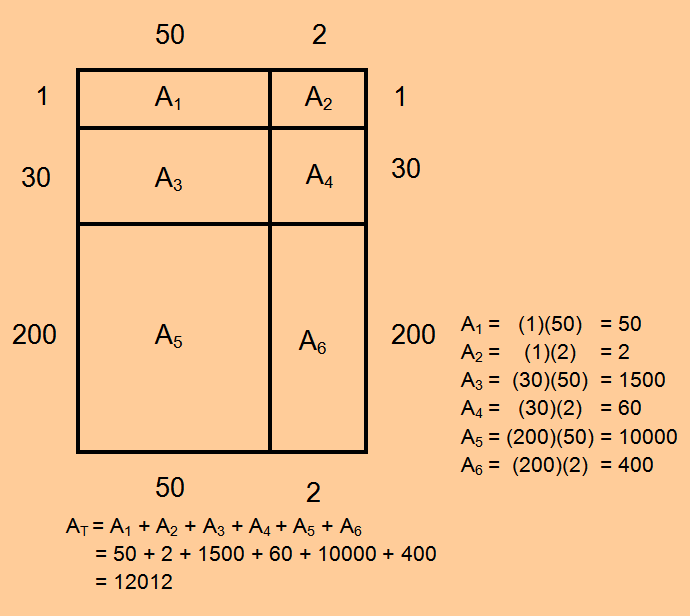
In this case, the area is the same as
. This we know throught that every one of the sms is one
of the partial products that we obtained in the multiplication by
decomposition.
Then we can conclude that
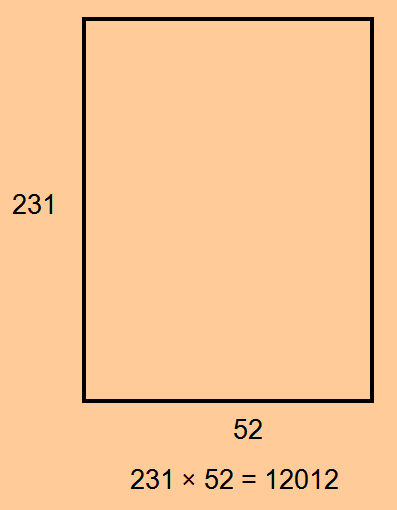
Example #3 Find the product of
.
Solution:
To be able to visualize this like the area of a rectangle, we should
first draw the rectangle with a factor as the width and another as
the height. Then we decompose some factors to know how many internal
rectangles we have to sum up.
In general,
Then the rectangle stays segmented like a rectangle 3 × 3:
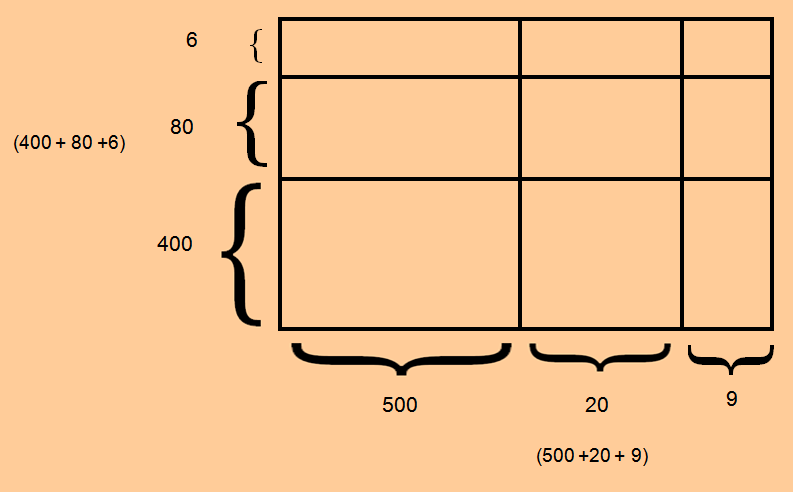
Now we find the area of every one of the rectangles, to later sum
them all up.
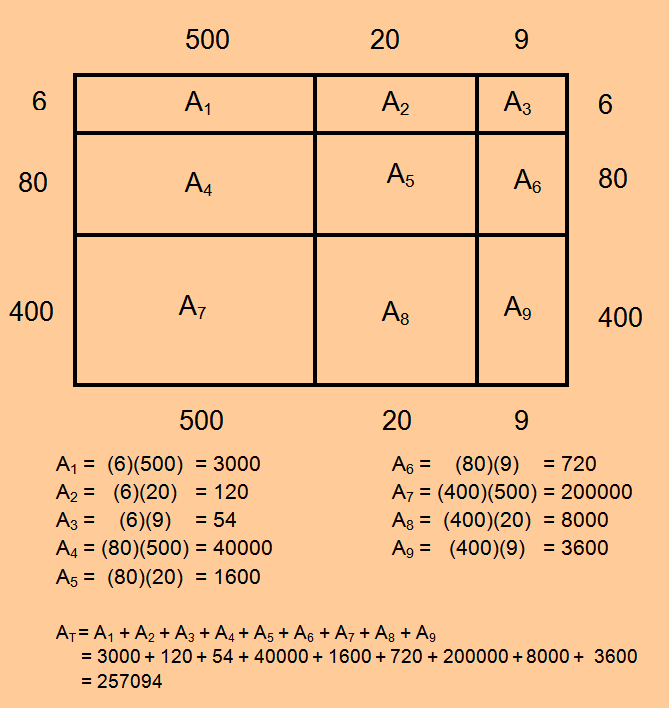
In this case, the area is the same as
. This we know through that every one of the sum is one
of the partial products that we obtained at the multiplication by
decomposition.
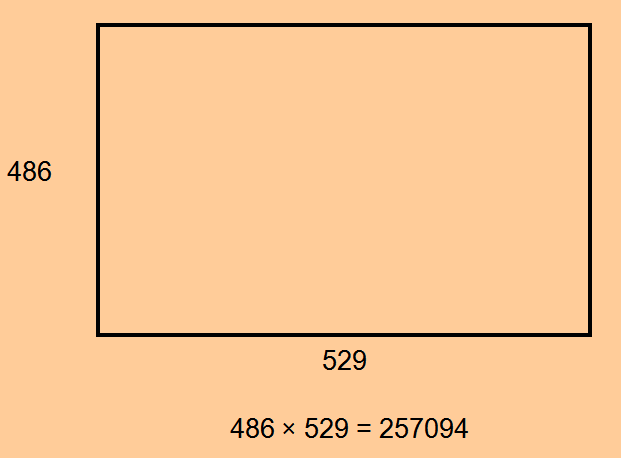
Then we can conclude that
Also known as hindu multiplication, reticulated multiplication,
multiplicatin of matrix; and in English as lattice
multiplication. The multiplication in a grid combines the
rectangular multiplication knowing that only the basic multiplications
can find the product of two factors.
Elaboration of the grid
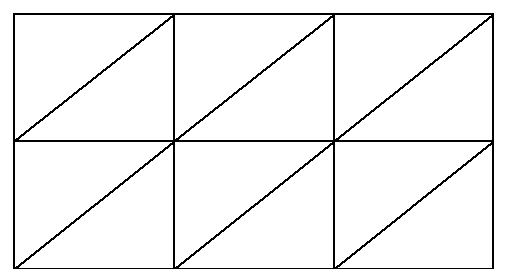
Create a grid that requires drawing a rectangular table m × n, with
the variables m and n representing the number of columns and lines they
should have in the table, as well as the quantity of digits that every
one of the factors has. In this case, we will make a 3 × 2 grid.
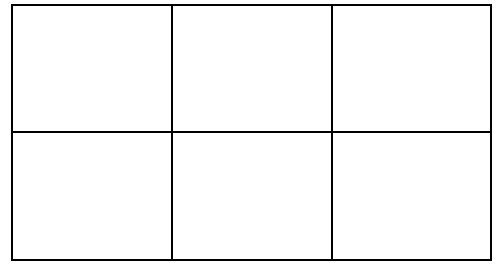
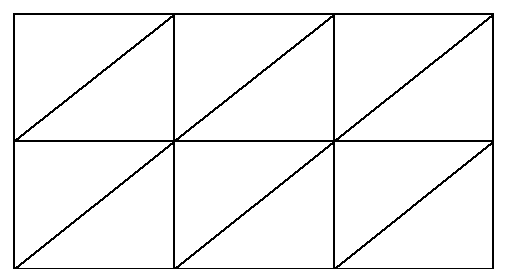
Later, we will add diagonals to every one of the cells.
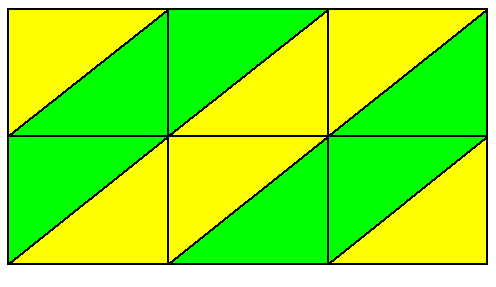
We will color the diagonal columns alternately.
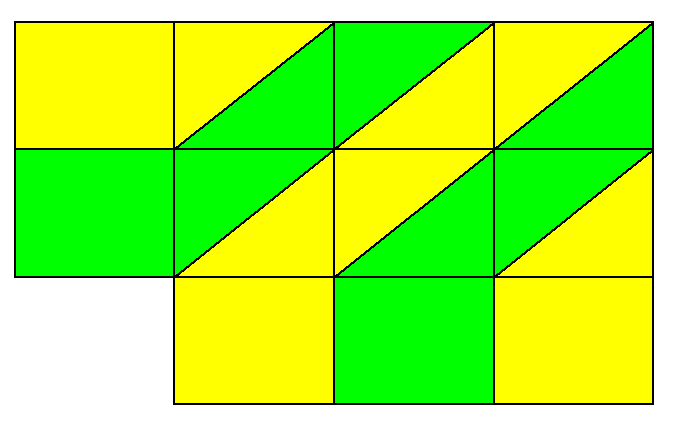
Finally, we will add an extra box and color it the color that is at
its side. Every one of the digits of the product can be found in their
respective box.
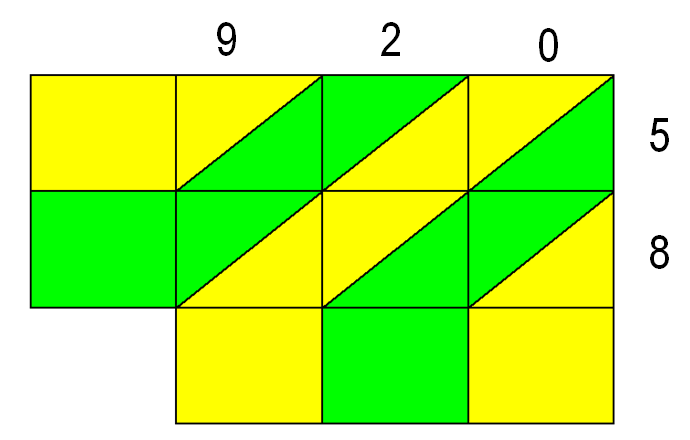
Example: Find the product of 920 and 58 using the grid.
Solution:
You place every digit from the first factor in a column; and every
digit of the second factor in a line, like is shown in the image:
Later you will find the product of every column by every line. The
tens of every one of those products are going in the left side of the
cell, and the units to the right. You should follow this form:
We sum up the diagonals, writing the resulting numbers in the
corresponding spaces. To have to regroup them, the tens result in
being summed in the following diagonal.
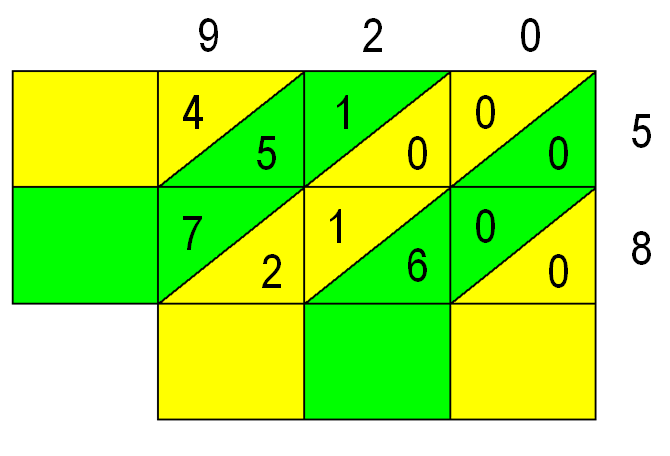
Then we know that 920 × 58 is the same as 53360.
In the following applet you can observe how you multiply using a
grid 2 × 2:
The standard multiplication is the traditional method utilized in
classrooms for decades to find the product of two numbers. A difference
of the multiplication of a grid, in the order that multiplies the
numbers is very important, that we regroup and multiply garden. Also
the calculations with verticales, should be that the factors are in a
column.
Example: Find the product of 764 and 18.
Solution: We mentally decompose the second factor, so that now
we now we have to multiply 764 × 10 and 764 × 8; then later find the
sum of those partial products.
764 × 8:
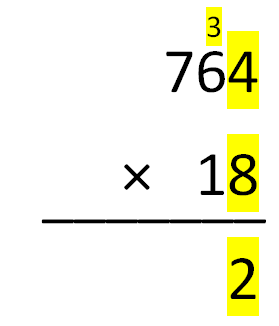
4 units × 8 = 32 units = 3 tens, 2 units
We write the 2 below the line and regroup the 3
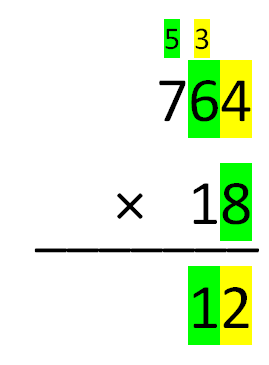
(6 tens × 8) + 3 tens = 48 tens + 3 tens = 51 tens = 5 hundreds,
1 ten
We write the 1 below the line (on the left side of the 2) and regroup
at the 5.
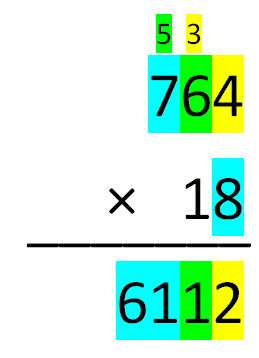
(7 hundreds × 8) + 5 hundreds = 56 hundreds + 5 hundreds = 61
hundreds = 6 millions, 1 hundredth
Like we don't have any more numbers that we ahve to multiply by 8,
the 61 hundredths lower. In general, 764 × 8 = 6112
764 × 10:
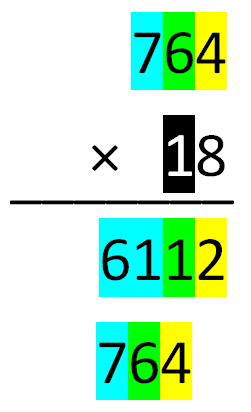
We repeat the same to multiply by 10, where we begin in the place of
the tenths, assuming that we are multiplying by 1. Then we don't
write the zero of the units, we know that 764 × 10 = 7640 .
Sum of partial totals:
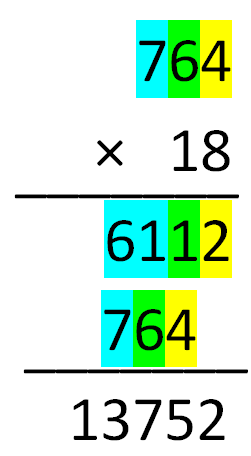
We find the total of the two partial products and like this we know
that the product of 764 and 18 is 13752.
Now that you have completed this lesson, you should be able
to:
- Multiply by powers of 10 or decompose a natural number in powers
of 10.
- Multiply two entire numbers utilizing the following methods:
- Multiplication of a rectangle utilizing the concept of the sum of
the areas.
- Multiplication in a grid
- Standard multiplication
|